Does Ultra-Processed Food Undo the Benefits of Eating Plant-Based?
Veggie burgers, oat milk and supermarket vegan food are all ultra-processed. I looked at what the large studies and Dr Michael Greger say about it.
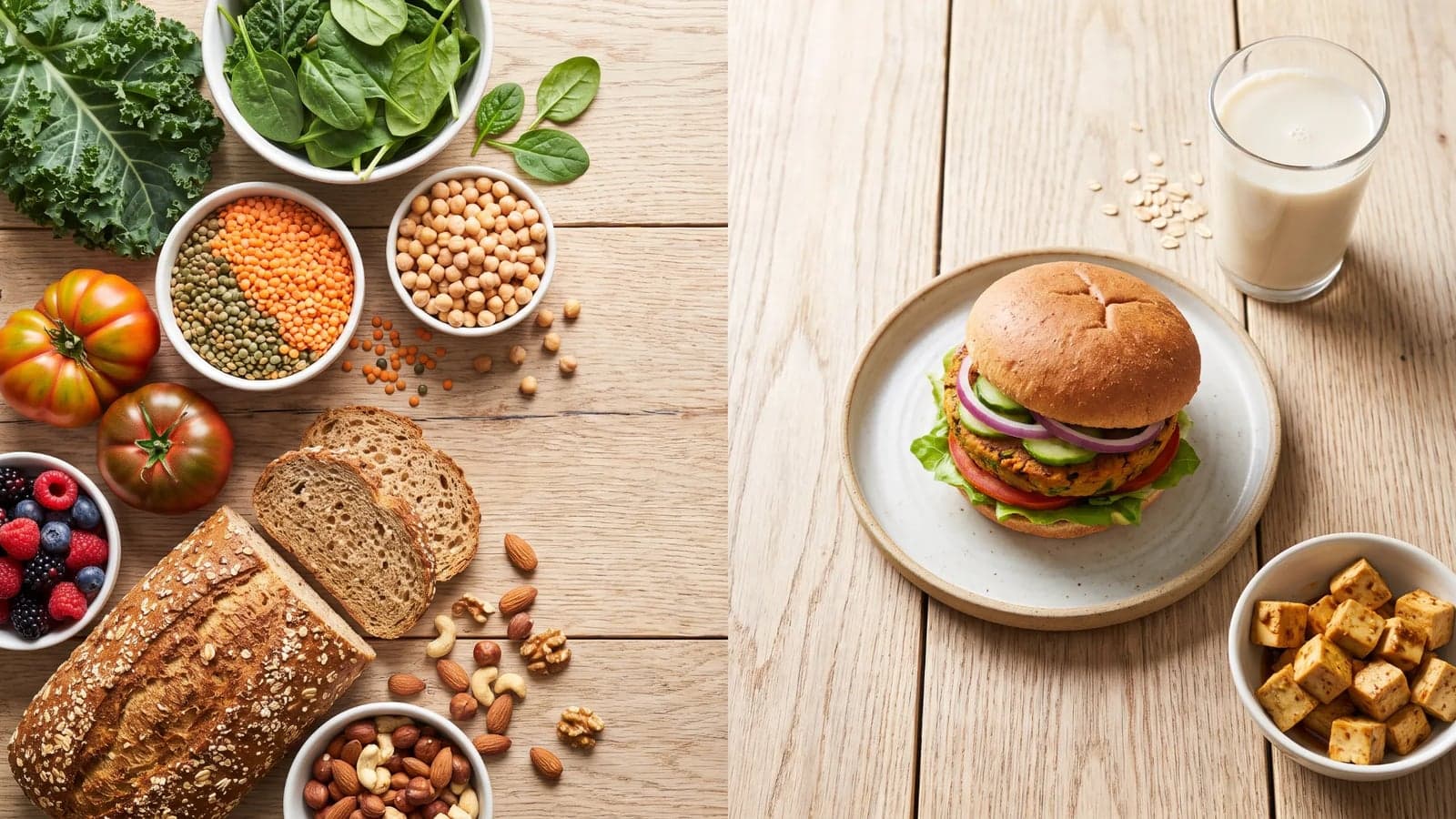
In my last post on food I admitted that I'm very good at finding the unhealthy vegan options, white bread included. A lot of plant-based food comes from a factory: veggie burgers, plant milks, vegan cheese, ready meals. Which raises a fair question: does all that processing cancel out the benefit of eating fewer animal products?
So I looked at the larger studies on PubMed, and at what Dr Michael Greger, the physician behind NutritionFacts.org, says in his book on ultra-processed food.
Quick Answer: The large studies point the same way: what matters most is the quality of a plant-based diet, and processing matters less than the food itself. In a 2026 UK Biobank study, a healthy plant-based diet was linked to lower mortality whether it contained a lot of ultra-processed food or little. Sugary plant foods, refined grains and sweet drinks are linked to higher risk. Plant-based meat alternatives were not linked to higher risk in a large European study, and Dr Greger calls them an exception among ultra-processed foods: better than what they replace, but not the best choice.
01.Does ultra-processed food undo the benefits of a plant-based diet?
Not as far as the large studies can tell. What undoes the benefit is a plant-based diet built on the wrong plants: sweets, refined grains, fries and sugary drinks. A healthy plant-based diet was linked to lower risk of death and type 2 diabetes in a 2026 study of almost 125,000 people, with or without a lot of processed food in it.
02.Is every plant-based diet healthy?
No, and this has been clear for almost ten years. In 2017 Harvard researchers published data on more than 200,000 American nurses and health professionals followed for over 20 years. They split plant-based eating into two versions. A "healthful" one was rich in whole grains, fruit, vegetables, nuts, legumes, oils, tea and coffee. An "unhealthful" one was heavy in juices, sugary drinks, refined grains, potatoes, fries and sweets.
People who ate the healthful version had a 25% lower risk of coronary heart disease. Those who ate the unhealthful version had a 32% higher risk, even though both groups ate fewer animal foods.
A study in Neurology in April 2026 found the same pattern for dementia. Among almost 93,000 people in the Multiethnic Cohort in Hawaii and California, a healthful plant-based diet was linked to a 7% lower risk of Alzheimer's and related dementias, and an unhealthful one to a 6% higher risk. The strongest signal came from change over time: people whose diet moved strongly towards the unhealthy plant foods over ten years had a 25% higher risk.
"Plant-based" says what you leave out. It says nothing about what you eat instead.
03.What did the new UK Biobank study find about ultra-processed food?
This is the study that answers the question most directly. Researchers from Queen's University Belfast followed 124,836 UK Biobank participants for 8 to 10 years and published the results in The Lancet Regional Health - Europe in June 2026. They split healthy and unhealthy plant-based diets into versions with a high and a low share of ultra-processed food.
- Mortality: a healthy plant-based diet was linked to about 8 to 9% lower risk of death, with high or low ultra-processed food content.
- Type 2 diabetes: both versions were linked to lower risk, and the low-processed version more strongly (28% lower against 11% lower).
- Heart disease: the healthy diet with more ultra-processed food was linked to 11% lower risk. For the low-processed version the authors found no clear link.
Their conclusion: the overall quality of a plant-based diet may matter more than how processed it is.
Not every study is this reassuring. Another UK Biobank analysis from 2025 found a small increase in mortality risk linked to plant-based ultra-processed foods as a group, alongside artificial sweeteners and drinks. That group covers a lot of different products, from crisps to packaged bread, so it's hard to read much into it for veggie burgers specifically.
04.Are veggie burgers and plant-based meat a problem?
Less than many people think, based on the studies I found. A large European study (EPIC, more than 266,000 people in seven countries) looked at which ultra-processed foods were linked to developing two or more chronic diseases, such as cancer, heart disease and diabetes. The risk was driven mostly by ultra-processed animal products, like processed meat, and by sugary and artificially sweetened drinks. Plant-based alternatives were not linked to higher risk.
There is also a small randomised trial from Stanford, by Christopher Gardner's team, whom I wrote about last time. 36 adults ate at least two servings a day of plant-based meat for eight weeks, and real meat for another eight weeks. On the plant-based products their LDL cholesterol and TMAO, a compound linked to heart disease, were lower, and they weighed slightly less.
Dr Michael Greger makes a similar case in his 2026 book Ultra-Processed Foods: Concerns, Controversies, and Exceptions. He is no fan of ultra-processed food in general, but he describes plant-based meat as the exception: better in most ways than the foods it was designed to replace. As summaries of the book put it, they are better but not best: a useful step towards whole plant foods rather than the goal. He also points to sodium, which can be high in seasoned plant-based products.
05.What do I take from it?
Three things stand out for me:
- The label "vegan" doesn't make food healthy. Sweets, white bread and sugary drinks are plant-based too. The studies link them to higher risk.
- Processing is not the main question. A veggie burger in a meal with beans, vegetables and whole grains looks fine in the data. A plant-based diet of biscuits and soft drinks does not.
- Plant-based meat is a swap, not a staple. It looks better than the meat it replaces, but whole foods still come first. Checking the salt on the label is worth it.
All of these studies are observational, apart from the small Stanford trial. People report what they eat, and those who eat well often live differently in other ways too. The studies show links, not proof. But they point in the same direction, and it's the same one as last time: the quality of the food matters more than the label on the packet.
Cover image generated with Krea AI.
Sources
All studies were found via PubMed.
- Satija A, et al. Healthful and unhealthful plant-based diets and the risk of coronary heart disease in U.S. adults. J Am Coll Cardiol, 2017. doi:10.1016/j.jacc.2017.05.047
- Park SY, et al. Plant-based dietary patterns and risk of Alzheimer disease and related dementias in the Multiethnic Cohort Study. Neurology, 2026. doi:10.1212/WNL.0000000000214916
- Thompson AS, et al. Plant-based diets, ultra-processed foods, and risks of mortality and major chronic diseases: a prospective cohort study. Lancet Reg Health Eur, 2026. doi:10.1016/j.lanepe.2026.101736
- Wang Y, et al. Ultra-processed foods, biological ageing, and all-cause mortality risk: a prospective cohort study using 172,225 participants from UK Biobank. GeroScience, 2025. doi:10.1007/s11357-025-01810-7
- Cordova R, et al. Consumption of ultra-processed foods and risk of multimorbidity of cancer and cardiometabolic diseases: a multinational cohort study. Lancet Reg Health Eur, 2023. doi:10.1016/j.lanepe.2023.100771
- Crimarco A, et al. A randomized crossover trial on the effect of plant-based compared with animal-based meat on trimethylamine-N-oxide and cardiovascular disease risk factors (SWAP-MEAT). Am J Clin Nutr, 2020. doi:10.1093/ajcn/nqaa203
- Michael Greger, Ultra-Processed Foods: Concerns, Controversies, and Exceptions, NutritionFacts.org, 2026. nutritionfacts.org
- Green Queen, "Dr Michael Greger: 'Plant-Based Meat Is the Ultra-Processed Food Exception'". greenqueen.com.hk