Acemoglu Doubts the AI Model Business. What That Means for Europe
As Anthropic files for a Nasdaq listing, Nobel economist Daron Acemoglu argues the money in AI will be in data and applications. Europe is better placed there.
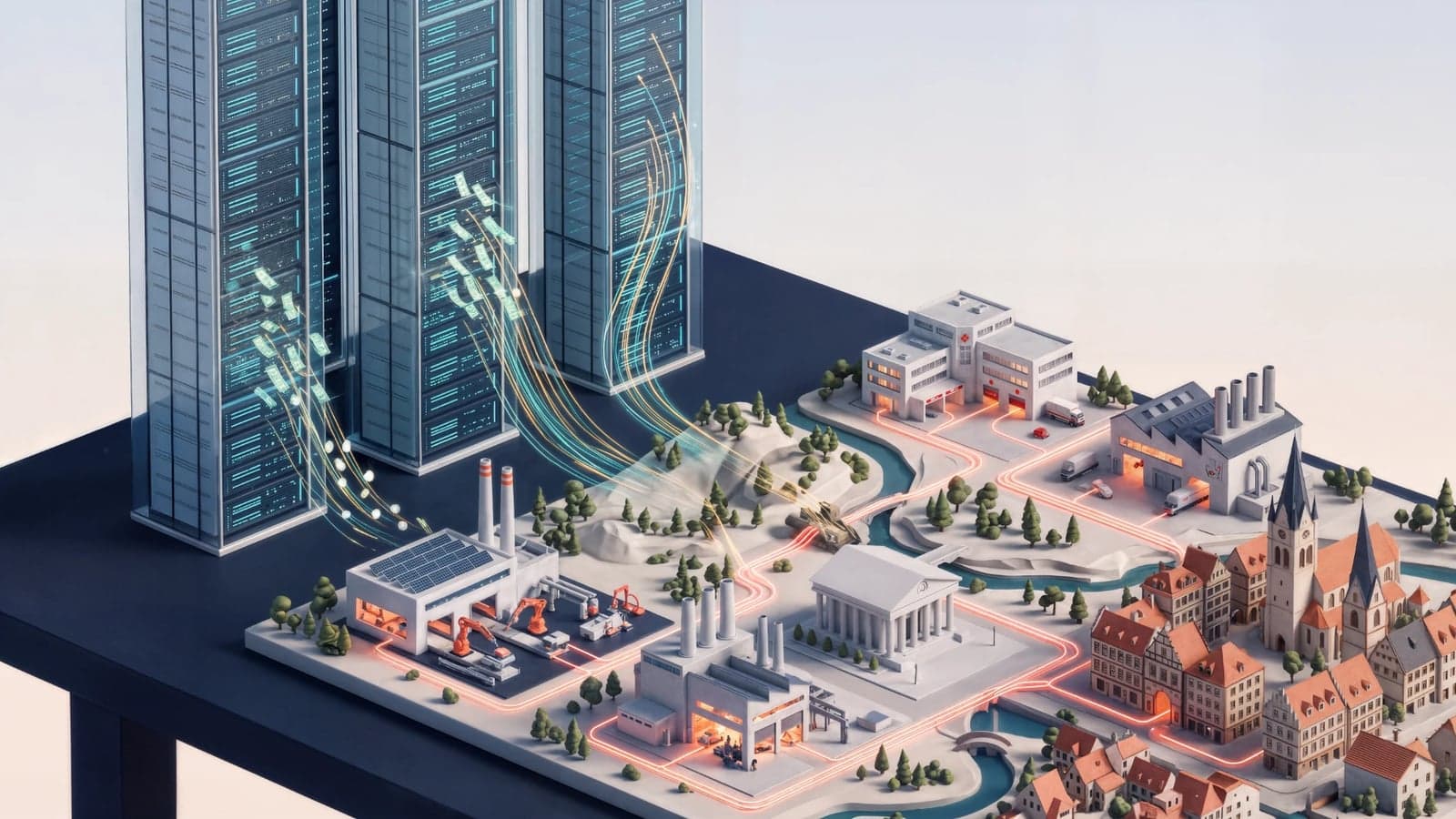
Anthropic filed for a Nasdaq listing on 26 October. Reports suggest it could be one of the largest stock market debuts on record. In a recent YouTube interview, the MIT economist Daron Acemoglu, who shared the 2024 Nobel Prize in economics, questioned the business model behind such valuations.
Asked how people could share in the wealth AI is creating, he said he does not see how foundation models will make a lot of money, and that there will be "some failed IPOs". He did not expect this immediately, as enthusiasm is still high.
Quick Answer: Acemoglu argues that open-source models will become good enough to limit what anyone can charge for a model, so the lasting value will be in high-quality data and in applications built for specific jobs. He contrasts US companies, which put their engineers into foundation models, with Chinese manufacturers such as Foxconn and BYD, which put theirs into the production line. Europe cannot match US spending on models, but much of its economy fits the second approach.
01.Why He Doubts the Model Business
Acemoglu's reasoning has two parts. Even if the leading labs keep improving, open-source models will follow closely and be good enough for most uses, which limits pricing. And developing and spreading the technology may run into bottlenecks of its own.
What is harder to copy, in his view, is a company's own high-quality data and an application that fills a specific need. He advises companies to build up their data and to compensate the employees whose knowledge it contains.
He presents this as one view among several. He compares AI to an elephant that everyone touches from a different side, and he notes that Erik Brynjolfsson of Stanford is more optimistic about productivity gains than he is. Investors are currently pricing the leading labs on a different assumption.
02.The US and China Made Different Bets
Acemoglu argues that the United States has put most of its engineering talent into foundation models. Chinese manufacturers he has spoken with, including Foxconn and BYD, are using theirs to bring AI and robotics into production. He reports that the work is slow and needs more engineers than the companies expected, and that China has a large supply of them.
He criticises what he calls "inevitabilism" in Silicon Valley: the belief that the current way of developing AI is the only one. General purpose technologies such as electricity or the printing press were developed in many directions, he says, and the direction affected who benefited.
03.Where Europe Fits
Europe is not in a position to compete on spending for foundation models. European startups raised about $25 billion in the third quarter, three quarters of it for AI, while a single US listing may raise several times that amount. Europe's difficulty in funding companies at scale is described in an earlier analysis on this site.
Acemoglu's examples of where AI could add value are of a different kind: tools for electricians, nurses, teachers and quality control. When the interviewer called such businesses boring, he disagreed and called them very exciting. A large part of Europe's economy consists of manufacturers, engineering firms, hospitals, banks and public services with long histories of their own data and experienced staff.
If Acemoglu is right, that is where Europe's opportunity in AI lies. If the market is right, the value will stay with a few model developers, most of them in the United States. The listings over the coming months will be an early test of which view holds.
Cover image generated with Krea AI.
Sources
- Interview with Daron Acemoglu, "Could AI leave people without meaningful work?", YouTube, 2026. youtu.be/0lsasYuzhL4
- NPR, "AI giant Anthropic files for an IPO that could break records", 26 October 2026. npr.org
- The Next Web, "Anthropic could raise $100bn, ten times Europe's largest listing in decades", 2026. thenextweb.com